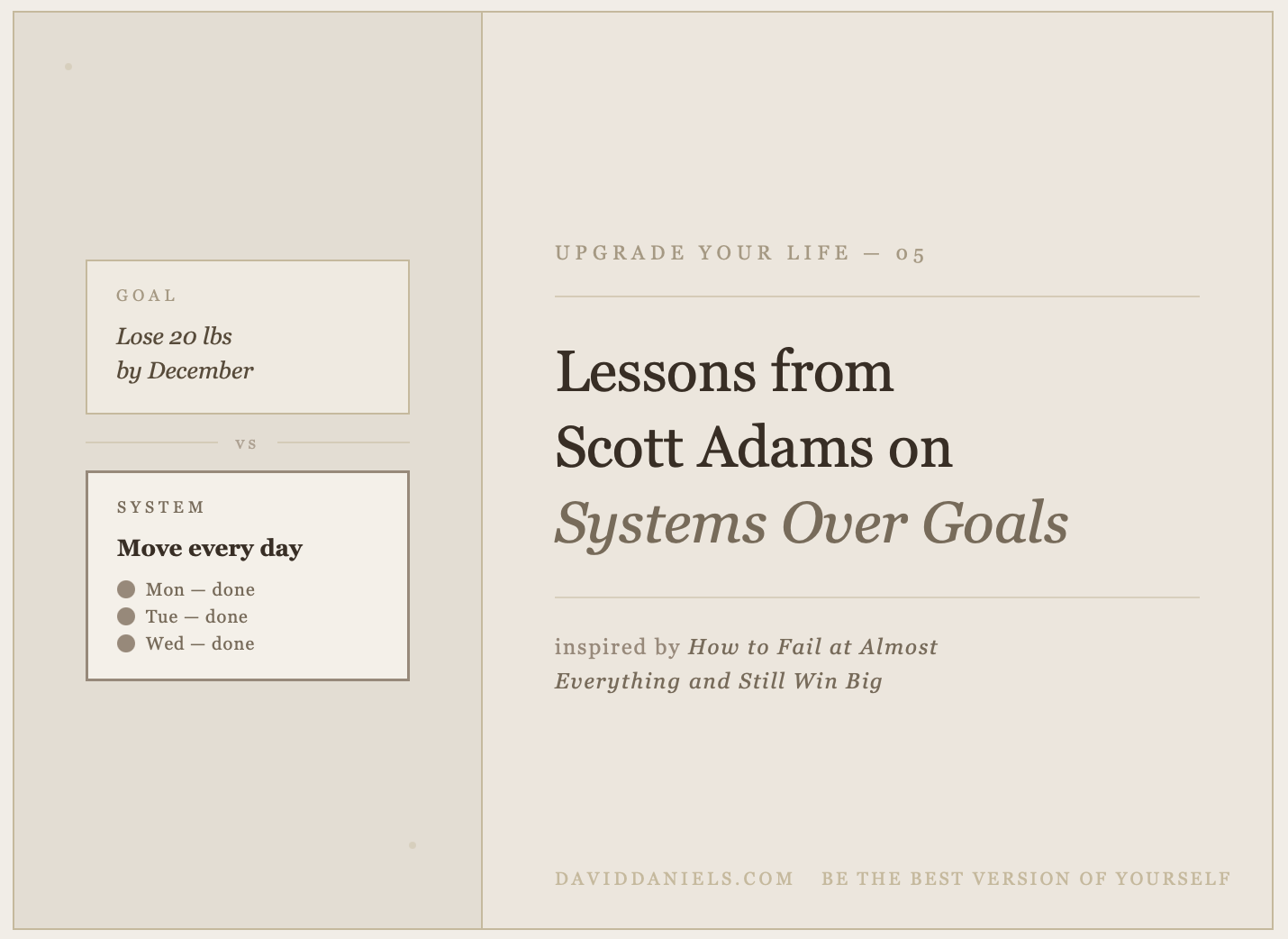
Lessons from Scott Adams on Systems Over Goals
Series: Upgrade Your Life — Post 5 of 6
Earlier this year I wrote about Scott Adams. You can find that post here…
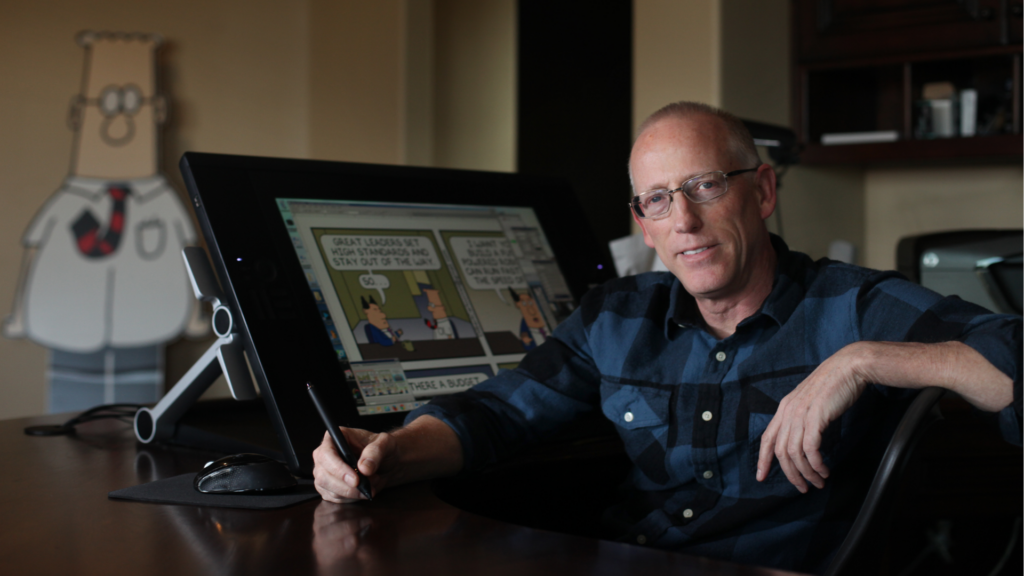
If you missed it, Adams was the creator of Dilbert — one of the most widely syndicated comic strips in history — and one of the more interesting thinkers on persuasion, habits, and human behavior I’ve come across. He passed away in January 2026, and I wrote about what his work meant to me.
One idea from Adams stuck with me more than anything else he wrote. It’s the one I keep coming back to in my own life, and it’s the one I want to dig into here — because it quietly runs underneath everything I’ve been writing about in this series.
The idea is simple: systems beat goals.
What Adams actually meant
Adams wrote about this in his book How to Fail at Almost Everything and Still Win Big, and the core argument goes like this.
Goals are a strange thing to organize your life around. A goal by definition puts you in a state of failure until the moment you achieve it. You want to lose 20 pounds — until you lose the 20 pounds, you’re failing. You want to write a book — until the book is done, you’re failing. The finish line is always somewhere ahead of you, and everything between here and there is a reminder of how far you still have to go.
Systems work differently. A system is something you do regularly that keeps you moving in a good direction — regardless of any specific outcome. Going to the gym three times a week is a system. Writing 500 words every morning is a system. Doing a weekly review of your priorities is a system.
With a system, you’re either doing it or you’re not. There’s no failure state built in. Every day you do the thing, you win that day.
Why this isn’t just semantics
When I first heard this distinction I thought it was a clever reframe but not much more than that. The more I’ve lived with it, the more I think it’s actually a fundamental shift in how you relate to your own progress.
Here’s what I mean.
Goals are future-oriented. They live out there somewhere, and you’re always trying to get to them. Systems are present-oriented. They live right here, in today, in what you actually do between now and when you go to sleep.
And here’s the uncomfortable truth: the future is largely outside your control. You can set a goal to double your income this year and work incredibly hard and still not hit it — because a thousand things you can’t predict will get in the way. But did you do the work today? That you can control. Did you show up? Did you do the thing you said you were going to do?
That’s yours. Nobody can take that from you.
Where goals still matter
I don’t want to oversell the anti-goal argument, because Adams wasn’t saying goals are useless — and neither am I.
Goals are useful for two things: pointing you in a direction, and giving you a way to know when you’ve arrived somewhere worth celebrating. If you have no idea what you’re working toward, a system has nowhere to point. The goal gives you the direction. The system is how you actually travel.
Think of it this way. “I want to run a marathon” is a goal. It tells you which direction to point your training. But “I run four times a week” is the system that actually gets you to the starting line. The goal matters. But the system is what does the work.
The problem most people have is they spend a lot of time thinking about the goal and very little time designing the system. They know where they want to go. They just haven’t figured out what they’re going to do on a Tuesday morning when they don’t feel like it.
What this looks like in practice
I’ve written in this series about using the Full Focus Planner, about weekly reviews, about the daily “big three.” All of that is systems thinking in practice.
The weekly review isn’t a goal. It’s a system. I do it every week — not because I’m trying to achieve something specific in that moment, but because it keeps me oriented toward the things that matter and catches the things that are slipping before they fall completely off the map.
Writing this blog is a system. I’m not writing toward a specific outcome. I’m writing because writing is part of how I think, how I process, how I stay honest with myself about what I actually believe. Twenty-five years of that system has produced more than any specific goal I set along the way.
The Write Open Act workbook I shared this year is built on the same logic — it’s a framework for designing the systems of your life, not just the destinations.
The question worth asking yourself
If you take one thing from this post, make it this:
For the most important areas of your life — your health, your relationships, your work, your finances — do you have a goal, or do you have a system?
Most people have goals. Fewer have systems. Almost nobody has both working together.
The goal tells you where you’re going. The system is how you get there day by day, on the days you’re motivated and the days you’re not, on the good weeks and the hard ones.
Scott Adams spent a career thinking about why some people succeed and others don’t. His answer, distilled down, was this: the people who win aren’t the ones with the biggest goals. They’re the ones who built the right systems and then just kept showing up.
That’s it. That’s the whole thing.
This is post 5 of 6 in the Upgrade Your Life series. Start at the beginning with The Gap Between Who You Are and Who You Want to Be. Next up: Your personal upgrade challenge — 30 days, one change.
David Daniels has been writing at DavidDaniels.com since 2001. Download the free life planning workbook, Write Open Act, and start building the systems that will actually move you forward.