The Full Focus Planner: An Honest 30-Day Review
Series: Upgrade Your Life — Post 3 of 6
I’m not a gear person.
I don’t spend hours researching the best productivity apps. I don’t have a color-coded system with seventeen categories. I’ve tried those things and they always collapse under their own weight within a few weeks, leaving me with a beautiful empty notebook and a vague sense of failure.
So when I tell you I’ve stuck with the Full Focus Planner longer than almost any other tool I’ve tried, that means something.
This isn’t a sponsored post. Nobody paid me to write this. I’m going to tell you what I genuinely like about it, what genuinely annoys me, and who I think it’s actually for — because most reviews of planning tools read like the person was paid to be enthusiastic, and that’s not useful to anyone.
What it is, in plain English
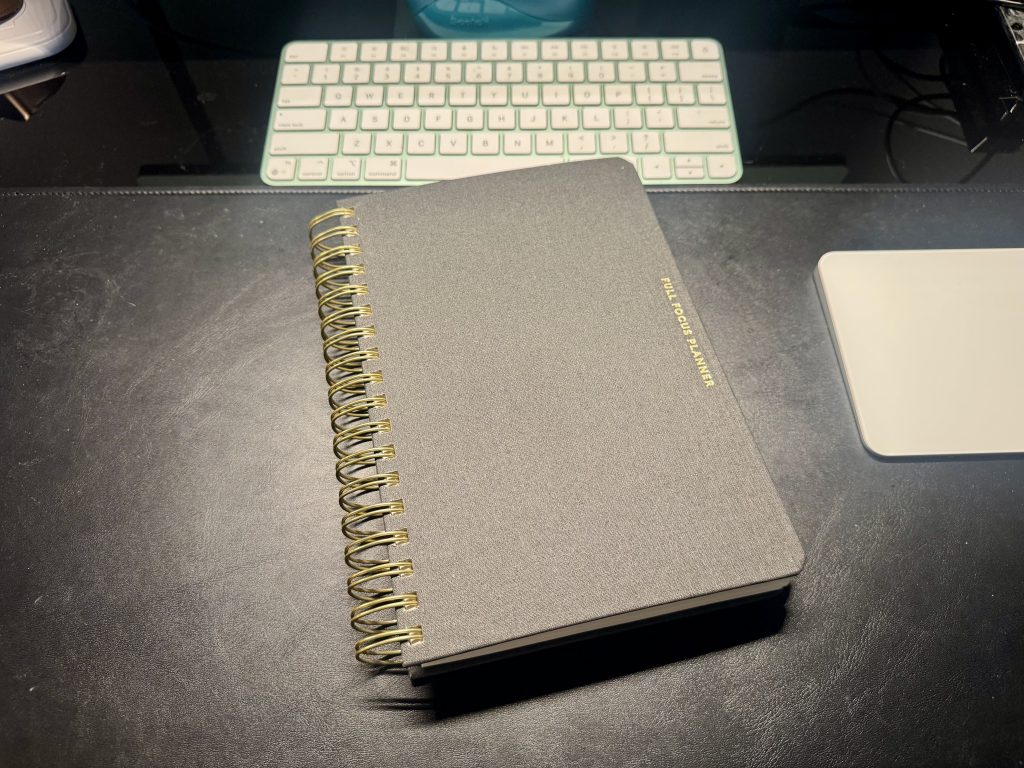
The Full Focus Planner is a physical, paper planner created by Michael Hyatt. It’s built around a pretty simple philosophy: you have annual goals, those goals break down into quarterly goals, those break down into weekly priorities, and those break down into a daily plan with three “big three” tasks that actually matter.
That’s it. The whole system is just that hierarchy — annual → quarterly → weekly → daily — repeated consistently.
It comes in a quarterly format, meaning you need a new one every 90 days. That’s intentional. 90 days is long enough to make real progress on something and short enough that you can’t indefinitely defer the things you keep putting off.
What I actually liked
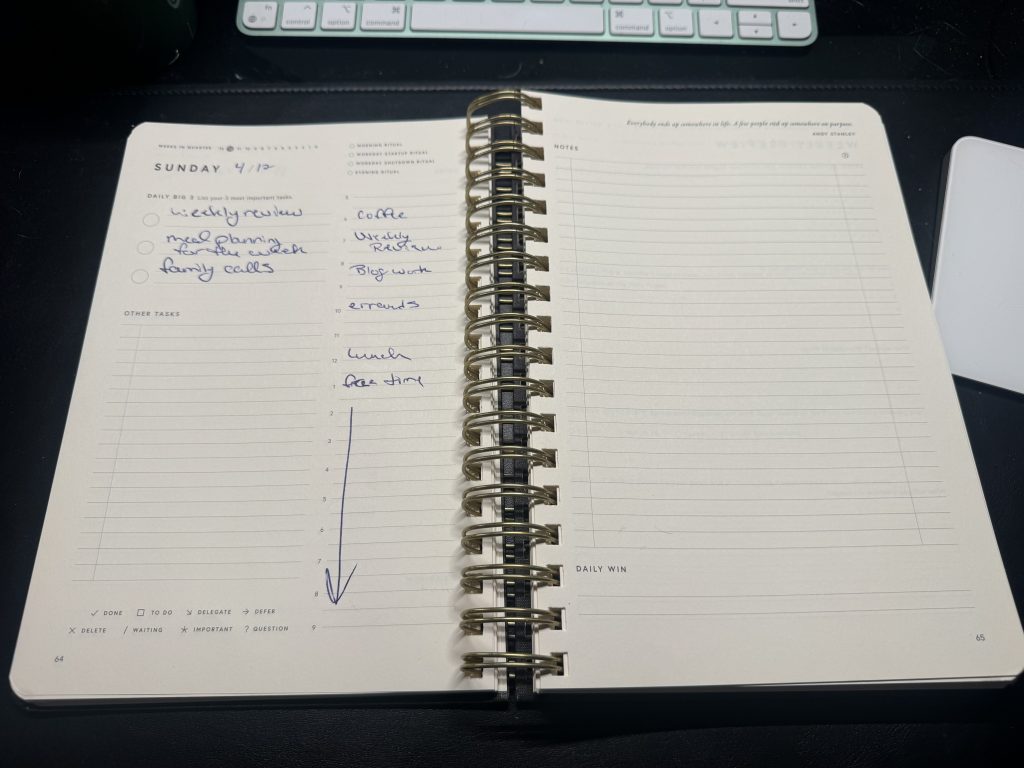
The “big three” daily structure. Every morning you write down the three most important things you need to do that day. Not ten things. Three. This sounds simple until you realize how rarely most of us actually prioritize that deliberately. The constraint is the feature — it forces you to decide what actually matters before the day decides for you.
The weekly preview and review. Sunday planning has become a non-negotiable part of my week because of this planner. You look at the week ahead, you identify what matters, and you block time for it before the reactive stuff fills every gap. The Sunday review takes about an hour, just long enough to finish a nice big cup of coffee.
It’s paper. I know this sounds like a limitation. It’s not. There’s something about writing things down by hand that makes commitments feel more real. I’ve used every digital tool imaginable and I always come back to paper for the things that actually matter. The act of writing is part of the thinking.
The quarterly rhythm. Starting a new planner every 90 days is a built-in reset. It forces a moment of reflection — did I actually do what I said I was going to do? It’s harder to lie to yourself when you’re literally holding the evidence.
What genuinely annoyed me
The layout takes adjustment. The daily pages have a specific structure that felt rigid at first. There’s a section for your schedule, a page for notes and a section for the big three. For the first week or two I kept wanting to use it differently, especially the notes page which had no structure. Eventually I stopped fighting the structure and lack of structure and let it work — but there’s a learning curve.
It’s not cheap. At $50 a quarter, you’re spending $200 a year on a planner. That’s not nothing. If you’re going to try it, commit to one full quarter before deciding whether it’s worth it. A subscription may be a little cheaper but I like buying at the last minute from Amazon.
No digital integration. If your life lives in Apple ecosphere, Google Calendar, Notion or on your phone, the Full Focus Planner lives in a separate world. You have to bridge that gap yourself. For some people this is a dealbreaker. For me it’s actually part of why it works — the planner is for the important stuff, the digital tools handle the logistics.
The motivational language. Some of the instructional content that comes with the planner system leans toward the inspirational side of things. If you read my last post, you know I’m skeptical of inspiration as a productivity tool. The planner itself is excellent. The surrounding content is optional. The company that puts out this planner manages a good community of users so you are never really alone in your planner use.
Who it’s actually for
The Full Focus Planner works best if you are already mostly self-directed — you work for yourself, you run a team, you have a lot of competing priorities, or you’re trying to make meaningful progress on something outside of your day job while also managing a full life.
If you’re looking for a system to tell you what your goals should be, this won’t do that. It assumes you already know what you’re working toward. Its job is to help you actually do those things consistently instead of just thinking about them.
It does that job very well.
My honest verdict
I’ve used a lot of planners. Most of them I abandon within a month. I’ve now used the Full Focus Planner for multiple quarters and I keep buying the next one.
That’s my review.
It’s not magic. It won’t fix unclear priorities or a chaotic life. But if you have things you genuinely want to accomplish and you keep losing them in the noise of daily life, this is the best physical tool I’ve found for keeping them in front of you.
If you want to try it, here’s the link. Start with one quarter. Use it every day for 90 days — including the weekly previews and reviews. Then decide.
This is post 3 of 6 in the Upgrade Your Life series. Missed the beginning? Start with The Gap Between Who You Are and Who You Want to Be. Next up: How I define “best version” — and how you should define yours.
David Daniels has been writing at DavidDaniels.com since 2001. Download the free life planning workbook, Write Open Act, to start planning with intention today.