I caught myself thinking it was a little juvenile.
The school book fair, the laminated list, the construction-paper reading log with a sticker for every title — somewhere along the way I’d filed “summer reading” next to those, in the drawer of things that belonged to a younger version of me. I’d quietly decided that reading for the summer, on purpose, the way a ten-year-old does, was something I’d grown out of without noticing.
What kicked the thought loose was time. The retail schedule is finally starting to loosen its grip on my calendar, and for the first time in a long while there’s a stretch of summer ahead that nobody else has spoken for. The honest part is that my first instinct wasn’t what will I read — it was a small, dumb worry that I wasn’t the kind of person who did that anymore. That somewhere past fifty, the slow pleasures quietly get smaller.
So I went looking to see if that was true, and it is not even close.
The thing I had exactly backwards
Here’s the assumption, stated plainly so I can watch it fall apart: that reading is something we do a lot of when we’re young, and then life — jobs, kids, screens, fatigue — slowly crowds it out until, by the time you’re my age, you’re mostly remembering being a reader rather than being one.
The data says the opposite. The people reading the most books, year after year, are the oldest ones. Adults sixty-five and up average something like a dozen books a year, comfortably ahead of every younger group — and the gap isn’t close. The twenty-somethings I assumed were out-reading me are, on average, finishing fewer books than their grandparents.
Look at it over time and it gets even better. Over the last few decades, overall reading rates in this country fell — but the decline landed almost entirely on people under fifty-five. Those of us on the other side of that line largely held on to the habit while everyone else drifted off it. We’re not the ones who quit. We’re the ones who stayed.
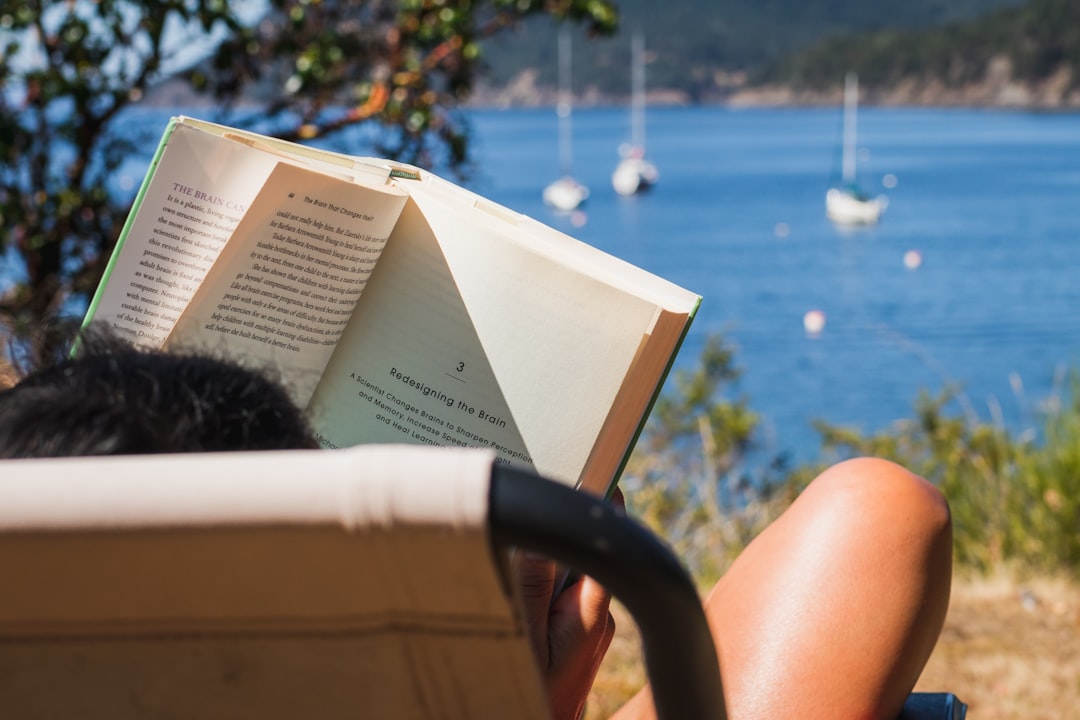
And there’s a detail in there that surprised me: older readers are the most likely to be print-only. I’m not one of them — I read on a screen, and I’m not apologizing for it. But the screen doesn’t change the part that matters. I’ll read in the sunlight, in a park, in the car while someone else drives, on the beach with the brightness cranked all the way up. It’s funny which image my brain reached for when it tried to call this whole thing juvenile: a paperback and a beach chair, the exact summery scene that statistically belongs to someone my age and older, not a kid’s. Swap the paperback for a screen and that reader is just me.
Why, though
The part that stuck with me wasn’t the numbers. It was a researcher’s offhand explanation of why older adults read more, because it quietly reframed the whole thing for me.
It isn’t that we’re more disciplined. It isn’t some virtue that switches on at a certain birthday. It’s that, eventually, the calendar opens up. The kids get older or leave. The career either settles or, in my case, gets deliberately set down. And reading — which never actually left, it just got buried under everyone else’s needs — slides right back into the space the moment the space exists.
The habit was never gone. It was just waiting for me to stop being too scheduled to notice it.
That landed because it’s the same lesson I keep relearning in every other corner of my life, just wearing a different hat. The thing you “don’t have time for” is rarely a thing you don’t want. It’s a thing the system squeezed out. Change the system — open the room — and the want walks right back in, like it had been standing in the hallway the whole time.
Which means the leap I’ve been agonizing over — stepping out of the retail lane to build and to travel — isn’t only a career decision. It’s a time decision. I’ve been framing it around work, around money, around what I’ll do with the daylight hours. But there’s a quieter dividend I hadn’t counted: the kind of unstructured evening where a book stops being a someday and becomes a tonight.
The case for doing it on purpose
There’s one more finding I’ll mention, not to turn this into a health column, but because it nudged the whole thing from nice to worth being deliberate about.
A long-running study that followed older adults for years found that the frequent readers were dramatically less likely to slide into cognitive decline down the road — on the order of cutting the risk nearly in half. Read that twice, because it’s quietly enormous. The thing I’d been ready to dismiss as a childhood leftover turns out to be one of the highest-return, lowest-effort habits available to a person in the second half of life. No app. No subscription. No gear. A book and a chair.
I’m wary of productivity-ifying a pleasure. The whole point of summer reading is that it isn’t a task — there’s no log, no sticker, no list to clear. But there’s a difference between optimizing something and simply choosing it instead of letting it happen by accident. And after a week of looking at all of this, I’ve decided to choose it.
So what is everyone reading?
If you’ve stayed with me this far, I suspect you have the same question I did once the novelty of the numbers wore off: fine, we’re reading — but what?
The durable answer, the part that doesn’t change much summer to summer, is more interesting than any single title. There’s a split worth naming. The women in my bracket lean hard into two lanes: the well-built mystery and thriller — they’re a big part of why that genre sits at the top of the charts at all — and the kind of literary fiction the big book clubs live on, the family sagas that move across decades, the smart historical novels, the quiet domestic story that opens up into something larger. The men tend to drift the other way, toward nonfiction — history, biography, the war-and-statecraft doorstop, the historical narrative that reads like a thriller but happens to be true. It’s a soft split, not a rule; plenty of us cross the aisle in both directions. But if you’ve ever wondered who keeps Oprah’s and Reese’s picks on the bestseller list, it’s largely women roughly my age, often in a book club — and if you’ve wondered who’s working through the latest 600-page presidential biography, that’s disproportionately the men. Either way, the reader is over fifty. We’re not a niche of the audience. We’re a lot of the engine.
The seasonal answer changes, so take this as a snapshot rather than a canon. As I write this, the book everyone in the book-club circles seems to be passing around is Kin by Tayari Jones — a sweeping story of two lifelong friends whose lives diverge and then collide, exactly the multi-decade kind of novel that crowd reaches for. There’s a sharp satire called Yesteryear getting the buzzier, more divisive conversations going. On the nonfiction side — the lane I tend to live in — Patrick Radden Keefe has a new investigation out, London Falling, the kind of true story he tells with so much thriller-like momentum you forget it isn’t a novel, and there’s a whole wave of Revolution-era narrative history cresting on the country’s 250th-anniversary mood. And on the lighter end, the beach-read shelf is doing what it always does in July. Next summer the names will be different. The shapes — the saga, the true-crime doorstop, the history that reads like a thriller, the one your sister-in-law won’t shut up about — will be exactly the same.
The point isn’t the list. It’s that there’s no shortage of company. Whatever you pick up, a surprising number of people your age are already three chapters in.
So here’s what I’m actually doing
Not a challenge this time. No 30-day anything. Just a decision, made out loud so it’s harder to wander away from:
This summer I’m going to read like it matters. Not aspirationally — actually. There’s a chair on the back of the house that gets the good late-afternoon light. There’s a stack I’ve been “meaning to get to” that I’m going to stop meaning and start reading. When the retail calendar loosens another notch, the first thing I’m spending the new hour on isn’t another screen. It’s a book, in that chair, with the phone in another room.
The flinch I started with — isn’t this a little juvenile? — had it exactly upside down. It’s not the young thing to do. It’s the thing the young are, sadly, doing less and less, and the thing the rest of us, if we’re paying attention, get to keep. Not as a relic of who we were. As one of the better parts of who we still get to be.
Summer reading at this age isn’t a leftover from childhood. It’s one of the quiet, durable, slightly defiant ways you stay the best version of yourself — one good chapter at a time.
What’s on your stack this summer? I’d genuinely like to know.
David Daniels has been writing at DavidDaniels.com since 2001. Download the free life planning workbook, Write Open Act, to start mapping the gap for yourself.