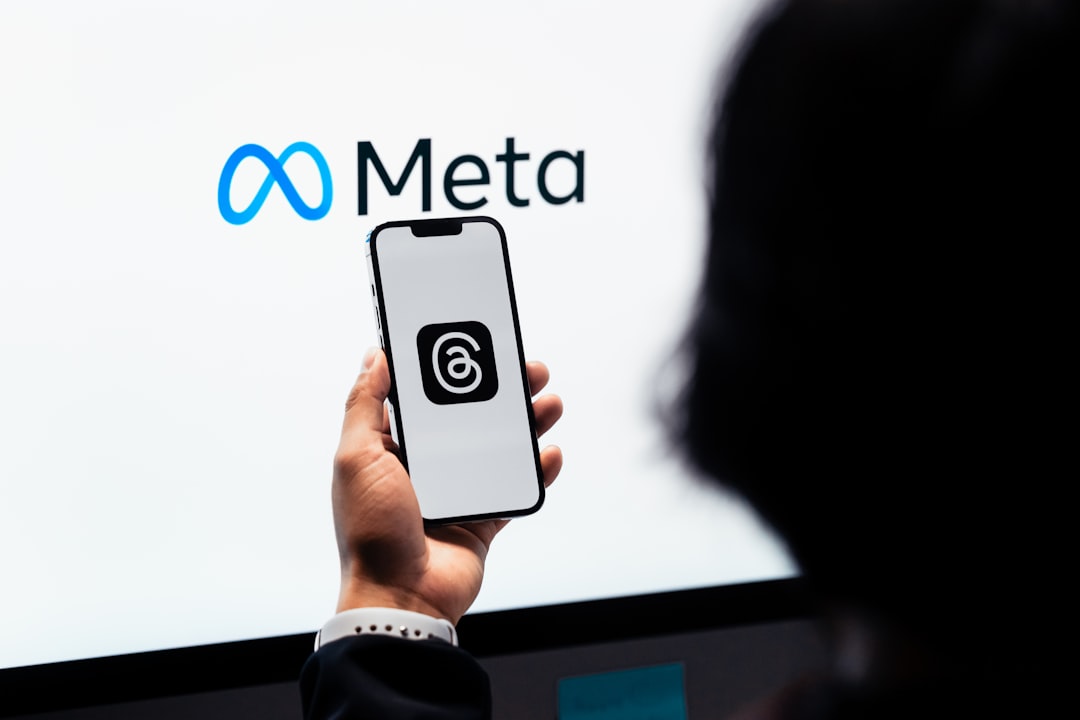
The notifications hit at 4am.
For thousands of Meta employees this past Wednesday, that early morning ping wasn’t an alarm — it was the message they’d been dreading. Meta, the parent company of Facebook, Instagram, and WhatsApp, began rolling out layoffs affecting 8,000 people, a full 10% of its global workforce. Integrity teams, cybersecurity staff, content designers — gone, in waves, before most of the world had finished their morning coffee.
Mark Zuckerberg put it plainly in his internal memo: “Success isn’t a given.”
He was talking about Meta’s fight to win in artificial intelligence. But that sentence has a way of echoing beyond a corporate boardroom. Because if success isn’t a given for one of the most powerful companies on earth — a company with billions of users and hundreds of billions in market cap — what does that mean for the rest of us building our careers in this new landscape?
This isn’t a story about Facebook. It’s a story about the future of work, and whether you’re ready for it.
It Happened Again
By now, the pattern is familiar enough that it barely shocks us — and that numbness itself should concern us.
This week’s round is Meta’s largest single cut of 2026, but it didn’t come out of nowhere. In January, roughly 1,000 employees from Meta’s Reality Labs division were let go. March brought another round affecting hundreds more. Now 8,000 more are out. And according to reporting from CNBC, sources inside the company had been expecting further rounds in August and into the fall — though Zuckerberg’s memo this week stated he doesn’t anticipate additional company-wide cuts this year.
The people who lost their jobs this week weren’t underperformers hiding in the back of the office. They were the people keeping the platform safe — the integrity teams responsible for removing hate speech and malicious content, cybersecurity professionals, and content designers who shaped how billions of people experience these apps every day. These were serious roles held by serious people. And they were eliminated anyway.
That’s the piece worth dwelling on. Don’t take your current position for granted.
This Isn’t Just a Meta Story
It would be easy to frame this as a Zuckerberg problem. His company, his decisions, his memo. But that framing lets the rest of us off the hook from seeing what’s actually happening across the industry.
In just the past two weeks, the same story has played out at multiple companies. Cisco announced it’s cutting 4,000 employees. And on May 13th, LinkedIn — the platform people use to find new jobs after they’ve been laid off everywhere else — quietly let go of roughly 875 of its own employees, about 5% of its workforce.
That last one is worth pausing on. LinkedIn isn’t a company in distress. Microsoft, its parent, reported LinkedIn’s Q1 2026 revenue climbed to $4.83 billion — up 12% year-over-year. They were growing. Profitably. And they cut anyway. If that doesn’t reframe what “job security” means in 2026, nothing will.
The official language varies — restructuring, reprioritization, AI investment, agility — but the through-line is the same. Companies are aggressively reallocating where headcount sits. LinkedIn’s CEO Daniel Shapero put it bluntly in his internal memo: the company needs to “reinvent how we work, with agile teams focused on our highest priorities.”
Meta isn’t just cutting 8,000 jobs. It’s simultaneously moving 7,000 existing employees into AI-focused roles and canceling plans to hire 6,000 more people. Microsoft, meanwhile, has committed roughly $190 billion in capital expenditure this year, almost all of it flowing into AI infrastructure. The workforce isn’t simply shrinking. It’s being transformed. Zuckerberg said it himself on an earnings call in April: “We’re starting to see projects that used to require big teams now be accomplished by a single very talented person.”
Read that sentence twice. Then ask yourself: is that talented person you?
What This Tells Us About the Future of Work
For a long time, a job at a major tech company felt like the closest thing our generation had to a sure thing. Competitive pay, great benefits, job security — the holy trinity. The events of the past few years have made it clear that no such thing exists.
The roles disappearing right now share a common thread: they were task-oriented, process-driven, or dependent on scale that AI is quickly absorbing. Content moderation at volume. Certain categories of design work. Back-office and operational functions that can now be streamlined with the right model and the right prompt.
The roles being created — or preserved — are different. They require judgment. Context. Creativity. The ability to ask the right question, not just execute the right process. They require, in other words, things that are distinctly human.
This doesn’t mean every job is at risk or that AI is some unstoppable force of destruction. But it does mean the game has changed. And the people who will thrive in the next decade are the ones who understand the new rules — not the ones pretending the old rules still apply.
How to Layoff-Proof Yourself
Let’s get practical. Because reading about layoffs and walking away with nothing but anxiety isn’t useful to anyone.
Build skills that sit above automation. Technical skills will always matter, but they’re increasingly a baseline. What AI can’t easily replicate is your ability to read a room, navigate ambiguity, mentor others, and synthesize information across domains. Leadership, communication, and critical thinking aren’t soft skills — they’re survival skills in an AI-first economy.
Stop being siloed. The integrity team members who lost their jobs this week had deep expertise in a specific function. That expertise was valuable — until the company decided it wasn’t. The more you can operate across disciplines, connect dots between teams, and understand the full picture of your organization, the harder you are to cut.
Make continuous learning non-negotiable. Not as a hobby. Not “when you have time.” As a deliberate, scheduled part of your week. The people who are being moved into new AI-focused roles at Meta are the ones who already had adjacent skills and the demonstrated ability to adapt. You want to be that person before the decision is made for you, not after.
Build something outside your job. A side project, a portfolio, a newsletter, a skill set you own. Employment is a contract that either party can end. What you build for yourself can’t be taken away by a 4am notification.
The Mindset Shift You Need Right Now
Here’s the real talk: most of us only update our career thinking when something forces us to. A layoff. A bad review. A company imploding. We treat career resilience as reactive rather than proactive.
That has to change.
The best version of yourself — the version this blog is always pushing toward — doesn’t wait for a crisis to start thinking about growth. That version of you treats uncertainty not as a threat but as information. As a prompt to ask better questions. What skills am I building? Who am I becoming? What would I do if my role disappeared tomorrow?
That last question isn’t meant to be scary. It’s meant to be clarifying. Because the people who’ve thought through that question — honestly, specifically, without flinching — are the ones who move through disruption with more grace than panic.
Meta’s 8,000 weren’t given a warning. You have one right now.
What You Can Do This Week
You don’t need to overhaul your entire career in the next 48 hours. But you can take one concrete step.
- Audit your skills. Write down what you do every day. Now circle the things AI could do faster and cheaper. What’s left? That’s your starting point.
- Learn one new thing. Pick a skill adjacent to your current role and spend 30 minutes on it this week. Just 30 minutes. Momentum matters more than volume.
- Update your LinkedIn. Not because you’re looking for a job — because knowing your story clearly is a habit worth maintaining even when things are good.
- Have the conversation. With a mentor, a peer, a friend who gets it. Sometimes the clearest thinking comes from talking out loud, not just scrolling the news.
Zuckerberg said success isn’t a given. He’s right. But it’s also not a mystery. It goes to the people who keep showing up, keep growing, and refuse to let circumstance be the only thing writing their story.
Be that person.
Did this resonate? Share it with someone who needs to hear it. And if you’re working through a career transition or just trying to level up, explore the rest of the blog — there’s a lot here to help.
David Daniels has been writing at DavidDaniels.com since 2001. Download the free life planning workbook, Write Open Act, to start mapping the gap for yourself.