The Day the Lights Went Out: Remembering the Northeast Blackout of 2003
On a hot Thursday afternoon in August 2003, the power grid across much of the Northeastern and Midwestern United States — and parts of Canada — collapsed in a matter of minutes. What started as a few tripped transmission lines in Ohio snowballed into one of the largest blackouts in North American history, plunging 50–55 million people into darkness.
It was a stark reminder of just how interconnected — and fragile — our modern infrastructure really is.
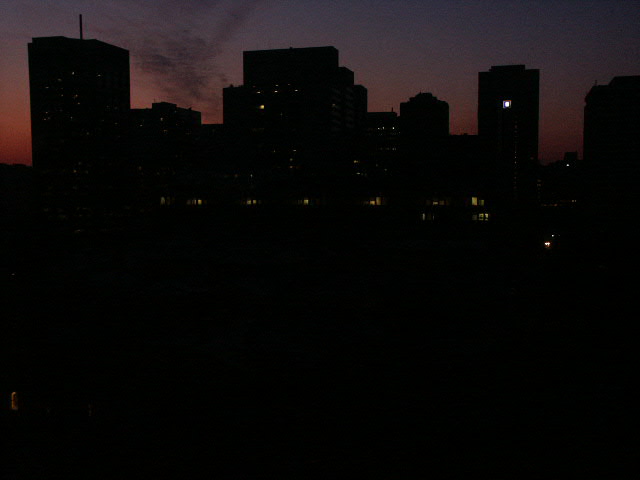
What Happened on August 14, 2003?
The trouble began in northern Ohio around 3 p.m. High electricity demand from air conditioners caused transmission lines to overheat and sag. By 4:05 p.m., several lines contacted overgrown trees and tripped offline. A critical software bug in the control room of FirstEnergy meant operators had no idea the situation was deteriorating.
Within nine minutes, the problem cascaded across the grid. Generators automatically shut down to protect themselves, power flows reversed uncontrollably, and entire regions went dark.
By 4:10 p.m., 50 million people in eight U.S. states and Ontario, Canada, lost power.

The Human Side of the Blackout
In New York City, the outage hit during evening rush hour. Subways ground to a halt, trapping thousands underground. Elevators stopped mid-floor. Traffic lights went out, turning intersections into chaotic free-for-alls. Yet, amid the disruption, something remarkable happened: people stepped up.

New Yorkers walked miles home, strangers helped each other up dark stairwells, and neighbors shared ice and flashlights. Reports of widespread looting or panic were minimal — instead, many remember street parties, impromptu barbecues, and a rare moment of quiet in one of the world’s busiest cities.
In Toronto and Detroit, similar scenes unfolded: volunteers directing traffic, people sleeping on sidewalks to escape hot apartments, and water systems struggling without pumps.
The Cost and the Chaos
- Economic impact: Estimates ranged from $4 billion to $10 billion in lost productivity, spoiled food, and overtime pay.
- Human impact: While there were no mass casualties directly from the outage, officials linked roughly a dozen deaths to carbon monoxide poisoning from generators, traffic accidents, and heat-related issues.
- Infrastructure strain: Airports closed, factories halted, and some areas waited days for power to return.

Why Did It Happen? The Official Findings
The U.S.-Canada Task Force investigation concluded the blackout was preventable. Key failures included:
- Inadequate vegetation management (trees touching lines)
- Poor operator situational awareness due to a software bug
- Inadequate coordination between regional grid operators
- Weak reliability standards that were voluntary rather than mandatory
Lessons That Changed the Grid
The 2003 blackout was a wake-up call. It directly led to:
- The Energy Policy Act of 2005, which made reliability standards mandatory with fines for violations.
- Billions of dollars invested in smarter grid technology, better monitoring systems, and improved tree-trimming practices.
- Stronger coordination between U.S. and Canadian operators.
Today’s grid is significantly more resilient than it was in 2003 — but with rising demand from data centers, EVs, and extreme weather, the work is never finished.
A Story Worth Remembering
The Northeast Blackout of 2003 wasn’t just a power failure. It was a moment that revealed both the vulnerability of our systems and the resilience of people.
In an era of increasing climate challenges and growing electricity demand, it’s a story that still holds powerful lessons for how we build — and protect — the infrastructure we all rely on.
Have you ever lived through a major blackout? Share your story in the comments below. And if you enjoyed this post, consider subscribing for more deep dives into history, technology, and the modern world.
David Daniels has been writing at DavidDaniels.com since 2001. Download the free life planning workbook, Write Open Act, to start mapping the gap for yourself.